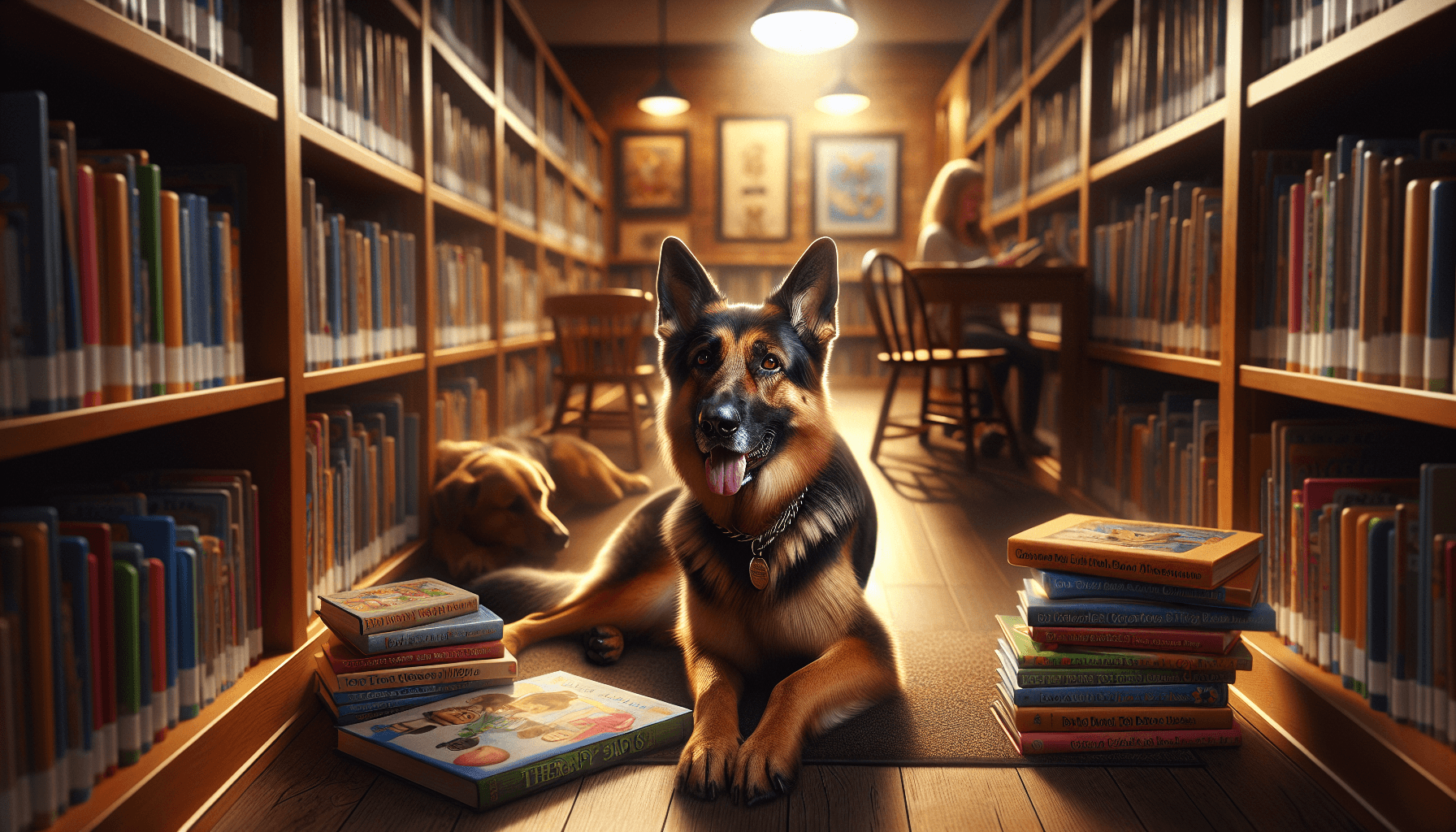
Preparing Puppies for Therapy Work
The foundation for exceptional therapy dogs is laid in puppyhood. Here's how to raise a puppy whose future includes helping children discover the joy of reading.
# Preparing Puppies for Therapy Work
When Biscuit arrived at eight weeks old, she was a golden ball of fur with floppy ears and already those intelligent, gentle eyes that would become her signature. Dr. Emily Chen, who would later found Paws & Pages, didn't know at the time that this puppy would become the cornerstone of a therapy dog reading program. But she did know something important: she was raising a puppy she wanted to become a therapy dog. And that knowledge shaped every decision she made from the first day.
The puppy who becomes an exceptional therapy dog isn't created through training alone. Training refines and channels natural qualities, but those qualities must be established during the crucial developmental windows of early puppyhood. Socialization, handling, exposure experiences, and foundational training during the first year of life create the neurological and behavioral architecture upon which later therapy training builds.
This guide captures what we've learned about raising puppies destined for therapy work. Whether you're planning to pursue formal therapy dog certification or simply want to raise a dog who's calm, confident, and wonderful around children, these principles apply. The goal is creating dogs who don't just tolerate therapy work—they thrive in it.
Understanding Developmental Windows
Puppy development occurs in distinct phases, each with unique opportunities for shaping future behavior. Missing these windows doesn't doom puppies, but it does make later development more difficult. Knowing the phases allows strategic use of each one.
**The Socialization Period (3-14 weeks)** represents the most critical window for exposure experiences. During this phase, puppies' brains are uniquely receptive to novelty; positive experiences during this period create lasting comfort that negative experiences or lack of exposure cannot easily replicate. Puppies who aren't exposed to children during this window may always find children somewhat strange; puppies who meet many children comfortably during this window usually love children for life.
Bella, our tiny Cavalier King Charles Spaniel, was raised by a breeder who understood developmental windows. Before Bella even came to her handler's home, she'd been handled by dozens of people, exposed to children of various ages, and introduced to common household sounds and objects. This early foundation meant Bella arrived already comfortable with the human variety she'd encounter in therapy work.
**The Fear Impact Period (8-11 weeks)** occurs within the socialization window but requires special attention. During this phase, negative experiences can create lasting fears that are difficult to modify later. This doesn't mean sheltering puppies from everything—it means ensuring that experiences are positive and that puppies aren't overwhelmed.
**The Juvenile Period (3-6 months)** continues socialization while adding more formal learning. Puppies can learn increasingly complex behaviors and begin understanding the rules of human households. This is prime time for foundation training that therapy work will later build upon.
**Adolescence (6-18 months, varying by breed)** brings testing of boundaries and regression in some behaviors. Patience and consistent reinforcement during this challenging phase solidifies what earlier periods established.
Comprehensive Early Socialization
For therapy dog preparation, socialization must be comprehensive and therapy-relevant. It's not enough for puppies to meet some people—they must meet many people who represent the diversity they'll encounter in therapy contexts.
**Child exposure** is paramount for reading dog preparation. Puppies should meet children of various ages: toddlers (supervised!), elementary schoolers, tweens, and teenagers. Each age group moves differently, sounds differently, and interacts with dogs differently. A dog comfortable with calm adults might find shrieking toddlers overwhelming if never exposed to them.
Daisy, our Samoyed, was raised in a home with three children under ten. By the time she was four months old, she'd experienced every variety of child behavior: gentle petting and accidental tail-stepping, quiet reading and excited playing, calm moments and tantrum chaos. This diverse exposure created unflappable comfort around children that training alone could never have produced.
**Environmental variety** prepares puppies for the diverse settings therapy work involves. Libraries, schools, hospitals, community centers—each has distinct sounds, smells, flooring textures, and ambient activities. During the socialization period, puppies should experience as many environment types as possible.
Take puppies to pet-friendly stores, outdoor festivals, quiet parks and busy ones, indoor spaces and outdoor spaces, places with smooth floors and carpeted floors. Each new environment expands the puppy's comfort zone. Finn, our Irish Setter, visited at least two new environments weekly during his first four months—pet stores, outdoor cafes, parks, friends' homes, veterinary offices—building the environmental confidence he'd need for therapy work.
**Sound exposure** deserves deliberate attention. Therapy environments include sudden noises, children's voices at various volumes, and unpredictable sounds. Puppies should hear clapping, laughing, crying, books dropping, doors closing, fire alarms, vacuum cleaners, and everything else they might encounter.
Digital sound exposure tools allow playing therapy-relevant sounds at low volumes, gradually increasing as puppies demonstrate comfort. Charlie, our Beagle, was raised with a sound conditioning program that included child sounds specifically—laughter, crying, yelling, playing. His current comfort with child-generated noise traces directly to this early exposure.
**Handling practice** prepares puppies for the varied physical contact therapy work involves. Every part of the puppy's body should be handled regularly by multiple people: ears touched, paws held, tails gently manipulated, mouths examined. Puppies should experience different handling styles—gentle, firmer, slightly awkward (mimicking children's less coordinated touch).
Rosie, our Cocker Spaniel, was handled extensively during puppyhood. Her ears (a sensitive area for many dogs) were touched dozens of times daily. Her paws were held and examined. Strangers were invited to pet her in their various ways. As an adult, Rosie accepts all handling without tension—a comfort that serves her well during reading sessions where children pet her enthusiastically.
Foundation Training Principles
While formal therapy dog training comes later, puppyhood should establish foundational skills and attitudes that later training builds upon.
**Calm settle training** teaches puppies to relax on cue and in designated spaces. This skill—the ability to become and remain calm even in stimulating environments—is perhaps the most important capability therapy dogs need. Start early by rewarding calm behavior, providing a mat or bed as a "settle spot," and gradually extending duration and adding distractions.
Olive, our Basset Hound, learned "settle" as a young puppy. By six months, she could maintain calm on her mat while visitors moved around, treats were handled nearby, and interesting sounds occurred. This foundation made her adult therapy work possible—she can settle in busy libraries because settling is deeply conditioned, not effortful.
**Impulse control exercises** teach puppies to manage their excitement and wait for permission. "Leave it," "wait," and self-control around food, toys, and exciting stimuli build the impulse management that therapy work requires. A dog who can't resist grabbing a treat can't resist demanding attention from the child who should be focusing on reading.
**Attention and engagement training** develops puppies' ability to focus on handlers amid distraction. This skill enables handlers to guide dogs through therapy sessions, redirect when needed, and maintain connection in stimulating environments. Eye contact games, name response training, and engagement in progressively distracting environments all build this capability.
**Sociable neutrality** is the ideal outcome of puppy socialization and training. Puppies should develop into dogs who are comfortable around people without being demanding, interested without being overwhelming, present without being intrusive. This balanced social orientation defines effective therapy dogs.
Max, our German Shepherd, exemplifies sociable neutrality. He notices new people with friendly interest, accepts interaction warmly, but doesn't demand attention or become overexcited by it. This quality wasn't trained—it was cultivated through thousands of socialization experiences where he learned that humans are pleasant but not overwhelming.
Creating Positive Associations
Beyond exposure and training, puppyhood should establish positive emotional associations with therapy-relevant experiences. Puppies shouldn't just tolerate children, handling, and environments—they should enjoy them.
**Pair experiences with pleasure.** When puppies meet new people, good things happen: treats, praise, gentle play. When they visit new places, they find joy: favorite toys, special snacks, happy handler energy. These pairings create automatic positive associations that make related experiences genuinely pleasant rather than merely endured.
Honey, our Goldendoodle, associates children with happiness because every childhood encounter during her puppyhood included treats and affection. Now, when children approach, her tail wags before any interaction occurs. She's not performing pleasure—she genuinely feels it because her brain learned the association during critical developmental periods.
**Avoid flooding and forced exposure.** More exposure isn't always better. Puppies pushed into overwhelming situations may develop negative associations that outweigh positive ones. Socialization should be systematic: gradually increasing intensity while monitoring puppy comfort. A puppy who's had ten positive child encounters is better prepared than a puppy who's had one overwhelming child encounter.
**Let puppies lead.** Within structured exposure plans, puppies should have some control over engagement level. Puppies who approach voluntarily learn that they control interactions; puppies who are forced to tolerate unwanted contact learn that they have no control—and may eventually assert control through avoidance or aggression.
Captain's handler understood this principle. During socialization, she created situations where Captain could approach new experiences at his own pace. He wasn't forced to greet every person or explore every space; he was encouraged and rewarded when he chose to engage. The confidence he developed through agency now manifests as his remarkable ease in therapy contexts.
The Role of Appropriate Challenge
While positive experiences dominate puppy raising, appropriate challenge develops resilience. Puppies who never experience minor frustration or startlement become fragile; puppies who experience appropriate challenge become robust.
**Recovery practice** deliberately exposes puppies to minor startles and then celebrates their recovery. A book dropped nearby, a sudden (non-frightening) sound, a briefly unstable surface—these experiences, followed by calm handler response and resumption of normal activity, teach puppies that disruptions are temporary and manageable.
Lucy, our Corgi, had regular recovery practice during puppyhood. Her handler would create mild startles—not enough to genuinely frighten, but enough to produce momentary reaction—then immediately convey calm through body language and tone. Lucy would startle, notice handler calm, and relax. Repeated hundreds of times, this pattern built the recovery speed she now demonstrates in therapy work.
**Graduated challenge** increases difficulty slowly as puppies demonstrate mastery. If a puppy is comfortable with quiet environments, add moderate activity. If comfortable with one child, add two. If comfortable with brief handling, extend duration. Each step builds on previous success while gently stretching capability.
**Appropriate failure** lets puppies experience minor setbacks without intervention. A puppy who tries something and doesn't immediately succeed, then tries again and succeeds, learns persistence. A puppy rescued from every difficulty learns helplessness. Therapy work will include challenges; dogs need the resilience to navigate them.
Health and Physical Preparation
Future therapy dogs need physical health and conditioning alongside behavioral preparation.
**Veterinary comfort** should be established early through positive veterinary experiences. Therapy dogs will receive regular health checks; dogs who are stressed by veterinary handling complicate these necessary procedures. Take puppies for positive vet visits where nothing happens except treats and attention.
**Physical conditioning** prepares puppies for the physical demands of therapy work—getting up and down, positioning for children's access, maintaining positions for extended periods. Appropriate exercise builds the strength and flexibility therapy work requires without damaging developing joints.
**Grooming tolerance** is essential for therapy dogs, who must be clean and well-maintained for every session. Puppies should be accustomed to bathing, brushing, nail trimming, ear cleaning, and all the maintenance that presentable therapy dogs require.
Jasper, our Standard Poodle, requires extensive grooming that would stress many dogs. But his handler established grooming as a positive experience from puppyhood, pairing every brushing session with treats and calm attention. Now adult Jasper enjoys grooming as a bonding ritual rather than enduring it as a chore.
When Professional Help Is Needed
Some aspects of therapy dog preparation benefit from professional guidance. Knowing when to seek help prevents problems that become more difficult to address later.
**Concerning behaviors** should prompt professional consultation: excessive fear, aggression in any form, extreme startle responses, or resistance to socialization that doesn't improve with patient exposure. Early intervention maximizes outcomes for these issues.
**Breed-specific challenges** sometimes benefit from professional insight. Breeds with strong protective instincts, high prey drive, or intense working orientations may need specialized approaches that general puppy raising guidance doesn't cover.
**Training plateaus** suggest that current approaches aren't working. Professional trainers can identify what's blocking progress and suggest alternatives. There's no shame in seeking help—it demonstrates commitment to the puppy's development.
**Temperament assessment** by professionals can identify whether puppies are actually suited for therapy work. Not every puppy, even well-raised ones, will have the temperament therapy work requires. Early assessment prevents investing years in preparation for work a particular dog won't be able to do.
The Long View
Puppy preparation for therapy work is an investment in a future that won't materialize for two or more years. Formal therapy dog certification typically requires dogs to be at least one year old, often older. The puppyhood work won't produce immediate results—it produces foundations upon which later success builds.
This long view requires patience and faith. There will be weeks when puppies seem to regress, when socialization feels like it's not working, when the eventual goal of a calm therapy dog seems impossibly distant. These periods are normal. Development isn't linear; it proceeds in spurts and plateaus.
Biscuit had a fear period at ten weeks when she suddenly became nervous about strangers—the same strangers she'd happily greeted days before. Dr. Chen maintained patient, positive exposure, and the fear period passed. Had she given up or responded with frustration, Biscuit's trajectory might have been very different.
The Puppy Who Became Biscuit
When that eight-week-old golden puppy arrived, no one could have predicted exactly who she'd become. But the preparation she received—comprehensive socialization, positive exposure, foundation training, appropriate challenge, and patient long-term commitment—gave her every opportunity to become her best self.
Today, Biscuit has been working as a therapy dog for over five years. She's helped hundreds of children discover that reading can be joyful. She's remained calm through fire alarms, emotional meltdowns, and every variety of childhood chaos. She's maintained her gentle nature, her genuine love of people, and her remarkable ability to convey safety through mere presence.
None of this was guaranteed. But all of it was prepared for, starting from her very first days. The puppy who becomes an exceptional therapy dog doesn't happen by accident. She happens through deliberate, patient, loving preparation that begins the moment she comes home.
Paws & Pages Team
The Paws & Pages team is dedicated to building confident readers through the unconditional love of therapy dogs. Our team of educators, trainers, and volunteers share tips, stories, and resources to support literacy and the human-animal bond.
View all posts