Managing Multiple Therapy Dogs at Events
Large events bring unique challenges when multiple therapy dogs work together. Here's how Paws & Pages coordinates our eighteen dogs for library events, school visits, and community gatherings.
# Managing Multiple Therapy Dogs at Events
The annual Children's Literacy Fair drew over five hundred families to the community center, and Paws & Pages brought eight of our therapy dogs to work the event. What followed was one of our most successful—and most instructive—experiences in multi-dog event management. By the end of the day, we'd facilitated over two hundred reading sessions, but we'd also learned hard lessons about spacing, rotation, and the delicate dynamics that emerge when multiple therapy dogs share a working environment.
Managing a single therapy dog in a familiar setting is relatively straightforward. Managing multiple dogs at large events introduces exponentially more variables: dog-to-dog interactions, handler coordination, environmental stressors, scheduling logistics, and the challenge of maintaining individual dog welfare while serving as many children as possible. Get it right, and you create magical experiences for hundreds of young readers. Get it wrong, and you risk stressed dogs, frustrated handlers, and disappointed families.
Over years of multi-dog events—from intimate library story times with three dogs to massive community festivals with our full team—we've developed systems and protocols that keep our canine team safe, comfortable, and effective. This guide shares what we've learned about the art and science of multi-dog event management.
Pre-Event Planning: The Foundation of Success
Successful multi-dog events don't happen spontaneously. They require careful advance planning that accounts for the venue, the expected crowd, the dogs' individual needs, and the specific goals of the event. Our planning process typically begins weeks before any major event.
Site assessment comes first. Before committing to bring multiple dogs, we need to understand the physical environment. How large is the space? What's the flooring like? Are there separate areas where dogs can be stationed without direct sightlines to each other? Where are the exits for emergency evacuations? What ambient noise levels should we expect? These questions determine not just whether we can accommodate multiple dogs, but how many and which specific dogs would be appropriate.
The Riverside Library's summer reading kickoff illustrates why this matters. The event takes place in a beautiful but acoustically challenging atrium where sound echoes and amplifies. We learned the hard way that noise-sensitive dogs like Ginger, our Shiba Inu, become stressed in that environment. Now we only bring dogs with proven noise tolerance to Riverside events—Captain, Max, Biscuit, and Olive have all demonstrated the ability to remain calm despite the challenging acoustics.
Dog selection for any event considers multiple factors: individual temperament, experience level, compatibility with other dogs scheduled to attend, and the specific needs of the anticipated audience. For elementary school events, we often prioritize smaller dogs like Bella, Lucy, and Rosie, who are physically accessible to young children. For teen events, larger dogs like Apollo, Max, and Koda tend to generate more interest. For events serving anxious populations, we choose our most unflappable dogs—Biscuit, Captain, and Olive, whose calm demeanors remain steady regardless of circumstances.
Handler coordination begins early. Each handler receives event details including their assigned station, their dog's schedule, break times, and emergency protocols. We use a shared digital calendar that all handlers can access, showing who's working when and where. For larger events, we designate an event coordinator—usually our most experienced handler—who serves as the central point of contact and decision-maker throughout the day.
Spatial Design: Creating Effective Work Zones
How dogs are positioned relative to each other dramatically affects event success. Dogs who work in too-close proximity may become territorial, distracted, or stressed. Dogs positioned too far apart miss opportunities for efficient visitor flow. Finding the right spatial arrangement requires understanding both dog behavior and crowd dynamics.
Our standard approach creates distinct "stations" where individual dogs work with their handlers. These stations maintain minimum distances that prevent direct engagement between dogs while allowing efficient movement of visitors between stations. The exact distance varies by dog—some of our more social dogs can work within fifteen feet of each other, while others need thirty feet or more of separation.
Apollo, our Great Dane, requires particular spatial consideration. His sheer size creates a physical presence that can overwhelm smaller dogs in adjacent stations. When Apollo works events, we position him at the end of a row with extra buffer space, ensuring that his station doesn't encroach on others. His handler, Robert, has learned to choose positions near walls or corners that naturally create boundaries.
Visual barriers can supplement physical distance. At events where space is limited, we've used portable partitions, bookshelf arrangements, or even strategically placed reading tents to create psychological separation between stations. Luna, our Border Collie mix, actually works better with visual barriers—her herding instincts make her want to track movement in her peripheral vision, which can distract from her reading sessions. A simple barrier that blocks sightlines to other stations helps her maintain focus.
Traffic flow deserves careful thought. We design station layouts that allow visitors to move easily between dogs without creating bottlenecks or requiring them to walk through another dog's working space. Clear signage helps families understand where to queue, how long waits might be, and which dogs have availability. At larger events, we station a volunteer at the entrance to direct traffic and manage expectations.
Understanding Inter-Dog Dynamics
Every dog has relationships with other dogs—some positive, some neutral, some challenging. Effective multi-dog event management requires knowing these relationships and planning around them.
Our dogs generally get along well—a prerequisite for joining the program—but "getting along" during a relaxed playdate differs from working in close proximity under the stress of a crowded event. Finn, our energetic Irish Setter, is best friends with Charlie during downtime, but his excitement can overwhelm the gentler Beagle during high-stimulation events. We've learned to schedule them for different shifts or position them on opposite ends of the venue.
Same-sex pairings sometimes create dynamics that mixed pairings don't. When we bring multiple male dogs to events, we're more careful about spacing and more watchful for signs of territorial behavior. This doesn't mean males can't work together successfully—Max, Captain, Tucker, and Apollo have all shared events without incident—but it requires attention that handlers must factor into their monitoring.
Hierarchy awareness helps prevent conflicts. Dogs naturally establish social hierarchies, and these hierarchies can shift depending on context. At home, Luna might defer to Koda, but at events, her Border Collie confidence sometimes asserts itself. Handlers who understand these dynamics can anticipate potential friction points and intervene before issues develop.
We maintain a compatibility matrix that documents which dogs work well together and which pairings to avoid. This living document, updated after each multi-dog event, helps with planning future events and training new handlers about inter-dog dynamics. It's not about labeling dogs as "good" or "bad" with others—it's about understanding that different combinations produce different results.
Handler Coordination and Communication
The dogs can only work as well as their handlers coordinate. Clear communication systems keep everyone informed and enable rapid response to changing conditions.
Pre-event briefings bring all handlers together to review the day's plan, discuss any concerns, and ensure everyone understands their responsibilities. These briefings cover practical logistics—arrival times, station assignments, break schedules—but also establish communication protocols for the day. Who do you contact if your dog needs an early break? What's the signal for "I need immediate assistance"? How do we communicate schedule changes?
During events, we use a combination of communication methods. For larger events, handlers carry radios on a dedicated channel. For smaller events, a group text thread often suffices. The key is ensuring that messages can be sent and received without disrupting ongoing reading sessions—a handler shouldn't have to stop a session with a child to check their phone.
The event coordinator monitors overall flow and makes real-time adjustments. If one station develops longer lines while another sits empty, the coordinator might redirect traffic. If a dog seems to be tiring faster than expected, the coordinator arranges early breaks or early departure. This central oversight prevents the tunnel vision that can develop when handlers focus entirely on their own dogs.
Shift changes require particular coordination. When one handler-dog team replaces another at a station, there's a transition period that must be managed carefully. We overlap shifts by fifteen minutes, allowing outgoing teams to properly wind down their sessions while incoming teams prepare. During this overlap, the dogs never interact directly—the outgoing dog leaves the station before the incoming dog arrives.
Break Scheduling and Welfare Monitoring
Working events is demanding, and dogs need regular breaks to maintain their effectiveness and wellbeing. Our break scheduling ensures that dogs get adequate rest without leaving stations unstaffed for long periods.
The standard schedule provides fifteen-minute breaks every ninety minutes of work. During breaks, handlers take dogs to designated relief areas, offer water, and allow quiet decompression time. These aren't just bathroom breaks—they're genuine rest periods where dogs can relax away from the stimulation of the event.
Different dogs need different break frequencies. Olive, our Basset Hound, can work longer stretches than most—her naturally laid-back temperament means she actually relaxes during sessions. Bella, our tiny Cavalier King Charles Spaniel, needs more frequent breaks because the physical demands of being handled by excited children tire her more quickly. Handlers adjust schedules based on their dogs' individual needs, communicating with the event coordinator when deviations from the standard schedule are necessary.
Welfare monitoring continues throughout events. Handlers watch for signs of stress—yawning, lip-licking, whale eye, excessive panting, displacement behaviors—and respond immediately when these appear. Sometimes a brief break resolves the issue; sometimes the dog needs to leave the event early. We never push dogs past their comfort levels to serve more children. A stressed therapy dog isn't effective anyway, and protecting their welfare ensures they can continue working future events.
Other handlers serve as backup monitors. When you're focused on managing your own dog and engaging with readers, you might miss signs that an adjacent team is struggling. We train handlers to watch each other's dogs and speak up when they notice potential concerns. This mutual monitoring has caught problems that individual handlers missed—fresh eyes sometimes see what familiar eyes overlook.
Managing the Unexpected: Weather, Crowds, and Crises
No matter how carefully you plan, events involve unpredictability. Effective multi-dog management requires protocols for common unexpected situations and the flexibility to handle truly novel challenges.
Weather affects outdoor events in ways that can vary dog by dog. When temperatures rise unexpectedly, dogs with thick coats—Daisy, Koda, Tucker—may need earlier breaks or adjusted schedules. When rain threatens, we need plans for rapid pack-up and decisions about whether to relocate to backup indoor spaces. Handlers carry emergency supplies appropriate for weather contingencies: cooling mats for hot days, rain covers for sudden storms, extra towels for mud.
Crowd surges can overwhelm even experienced dogs. The Lakeside Book Festival once experienced an unexpected rush when a local celebrity brought her children to the Paws & Pages station. Within minutes, our usually manageable lines tripled. The event coordinator implemented our crowd management protocol: limiting the number of people allowed in each station area, enlisting library staff to manage queuing, and temporarily pausing new arrivals until the surge subsided. The dogs handled it beautifully because we controlled their immediate environment rather than letting chaos reach them.
Medical emergencies—human or canine—require immediate response. When a young reader had an allergic reaction (unrelated to the dogs) at a school event, our handlers smoothly moved dogs away from the area where paramedics needed to work. When Rosie suddenly became ill during a library event, her handler immediately removed her while other handlers covered her station. We have protocols for both scenarios: creating space for human medical response and removing dogs who need veterinary attention.
Inter-dog incidents, while rare, can occur despite precautions. If two dogs show signs of tension, handlers immediately increase separation distance and alert the event coordinator. In the single instance where we had an actual altercation—fortunately minor and injury-free—the involved dogs were immediately removed from the event, the area was assessed, and the event continued with the remaining dogs. Post-event analysis identified the contributing factors (a combination of heat, noise, and inadequate spacing) and informed improved protocols.
Special Considerations for Different Event Types
Different event types bring different challenges for multi-dog management. Protocols that work perfectly for library story times may fail at outdoor festivals, and vice versa.
Library events typically offer controlled environments with manageable crowds, but often have space limitations that constrain dog positioning. At the Westbrook Public Library, we can only bring three dogs because the children's section simply can't accommodate more stations with appropriate spacing. These events prioritize dog selection over dog quantity—we choose the dogs best suited for that specific library's space and regular attendees.
School visits present their own challenges: excited children who may have limited dog experience, educators with varying comfort levels around animals, and the need to work within school schedules and regulations. Multi-dog school visits require close coordination with school staff and clear expectations about student behavior. We typically limit school visits to two dogs unless the school has specifically prepared students and has adequate space for more.
Outdoor festivals are often our largest events but also our most challenging. Unpredictable weather, diverse crowds, competing attractions, and extended hours all stress dogs and handlers. For these events, we bring extra handlers who can substitute for tired colleagues, build more generous break schedules, and establish clear criteria for deciding when conditions have deteriorated enough to warrant early departure.
Private events—birthday parties, corporate family days, community group gatherings—vary so widely that each requires individual assessment. Some private events are perfect for multiple dogs; others work better with a single team. Our event coordinator interviews organizers thoroughly before committing specific dogs and handlers, ensuring that expectations align with what we can safely deliver.
Training and Preparation for Multi-Dog Work
Dogs don't automatically know how to work alongside other dogs at events. This capability requires specific training and gradual exposure to increasingly complex multi-dog scenarios.
New therapy dogs start with single-dog events exclusively. Before ever working alongside other dogs, they need to master their individual skills: remaining calm during sessions, following handler cues reliably, recovering quickly from unexpected events. Only after demonstrating consistent single-dog performance do we begin multi-dog exposure.
Multi-dog training starts with low-stakes practice sessions. We might bring two new dogs to a quiet library during non-public hours, setting up stations and practicing transitions without the pressure of actual readers. These sessions let dogs and handlers experience multi-dog dynamics in a controlled environment where mistakes have minimal consequences.
Graduation to actual multi-dog events happens incrementally. A dog's first multi-dog event pairs them with one of our most stable veterans—usually Biscuit or Captain—at a smaller, calmer event. The experienced dog models appropriate behavior and helps absorb any stress the newer dog might generate. Handlers debrief thoroughly after these initial experiences, identifying what worked and what needs additional practice.
Ongoing training maintains and improves skills. Even experienced dogs benefit from periodic practice sessions where we work on specific challenges: closer spacing, noisier environments, longer durations. This continuous training keeps skills sharp and identifies any developing issues before they affect actual events.
Documentation and Continuous Improvement
Every multi-dog event generates learning opportunities. Capturing and applying these lessons requires systematic documentation and genuine commitment to improvement.
Event reports document what happened: which dogs attended, how many sessions occurred, any incidents or concerns, what worked well and what didn't. These reports become our institutional memory, informing future event planning and helping new handlers learn from collective experience. The compatibility matrix mentioned earlier emerges from these reports—patterns that might not be visible in any single event become clear when viewed across multiple reports.
Post-event debriefs bring handlers together to share observations and insights. What did you notice about your dog's behavior? How did the spatial arrangement work? Were break schedules adequate? These conversations often surface information that written reports miss—the subtle observations that experienced handlers make but might not think to document.
Protocol updates follow from debriefs. When we identified that noise-sensitive dogs struggled at the Riverside Library, we updated our site assessment documentation and our dog selection criteria for that venue. When we learned that certain dog pairings worked better than expected, we updated the compatibility matrix. Our protocols are living documents that evolve with our experience.
Sharing lessons across the broader therapy dog community extends our impact. We present at conferences, contribute to handler training programs, and maintain open communication with other therapy dog organizations. Many of the challenges we face aren't unique to Paws & Pages—sharing our solutions helps improve multi-dog event management industry-wide.
The Rewards of Multi-Dog Events
For all their complexity, multi-dog events offer rewards that single-dog sessions can't match. When families can choose from multiple dogs, they find matches that might not have happened otherwise. A child who's intimidated by Apollo's size might discover confidence with tiny Bella. A teen who thinks therapy dogs are "babyish" might find connection with Max's dignified German Shepherd presence.
Multi-dog events also create community among our handlers. Working together, supporting each other, sharing the challenges and joys of a demanding day—these experiences build bonds that strengthen our program. The camaraderie visible among handlers during events communicates something to families: this isn't just a service, it's a community united by belief in what dogs can do for young readers.
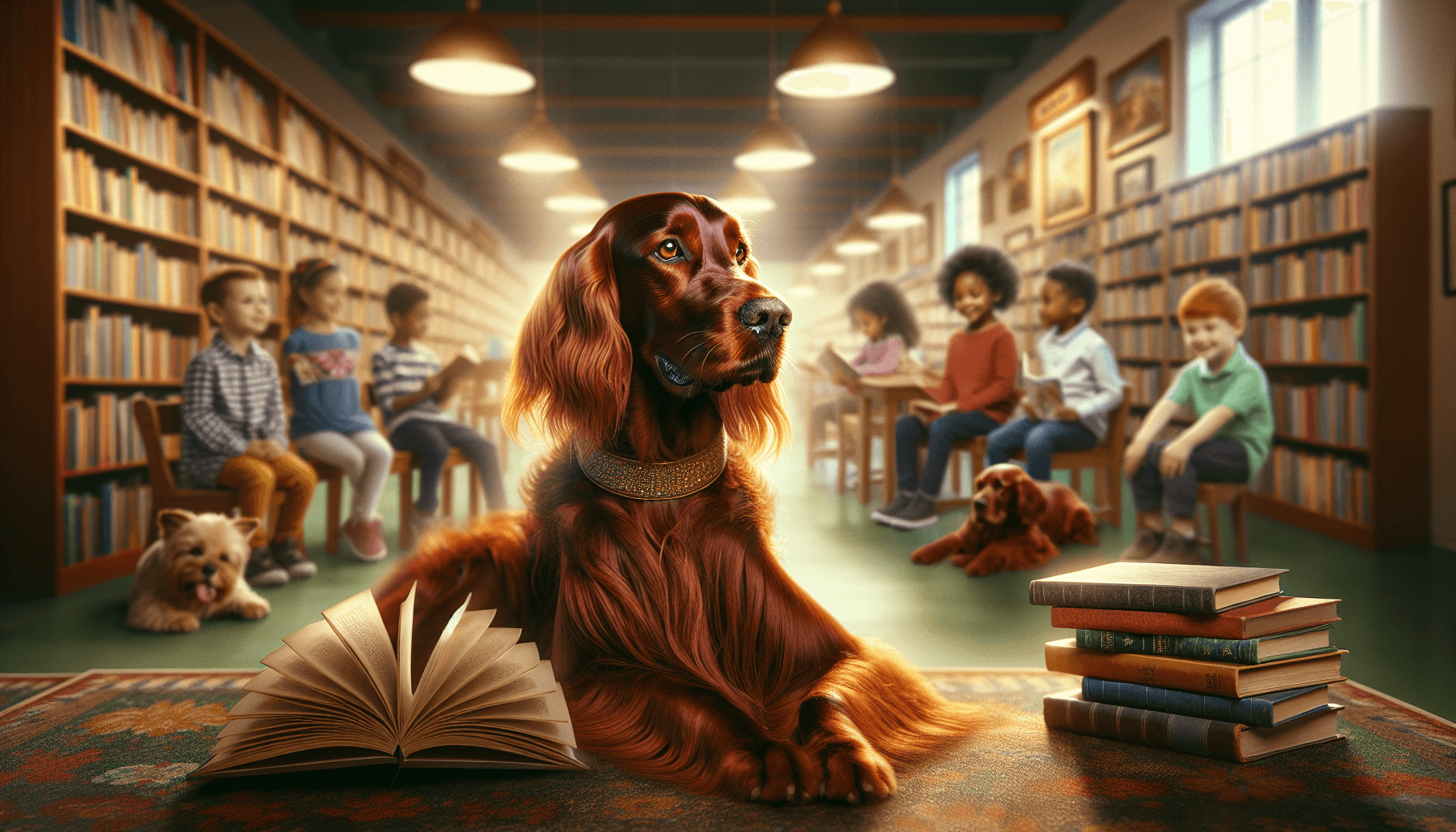
Most importantly, multi-dog events let us serve more children than any single dog could reach. At the literacy fair that opened this guide, those eight dogs facilitated over two hundred reading sessions in a single day. That's two hundred children who experienced the magic of reading to a patient, non-judgmental listener. Some of those children will remember that experience for years—might even remember it as a turning point in their relationship with books.
Managing multiple therapy dogs at events is demanding, complicated, and occasionally frustrating. But when you see a venue full of children reading to dogs, when you hear the laughter and see the joy and watch reluctant readers transform into engaged storytellers, every logistical challenge fades. The complexity serves a purpose: creating more opportunities for dogs to do what they do best.
Paws & Pages Team
The Paws & Pages team is dedicated to building confident readers through the unconditional love of therapy dogs. Our team of educators, trainers, and volunteers share tips, stories, and resources to support literacy and the human-animal bond.
View all posts