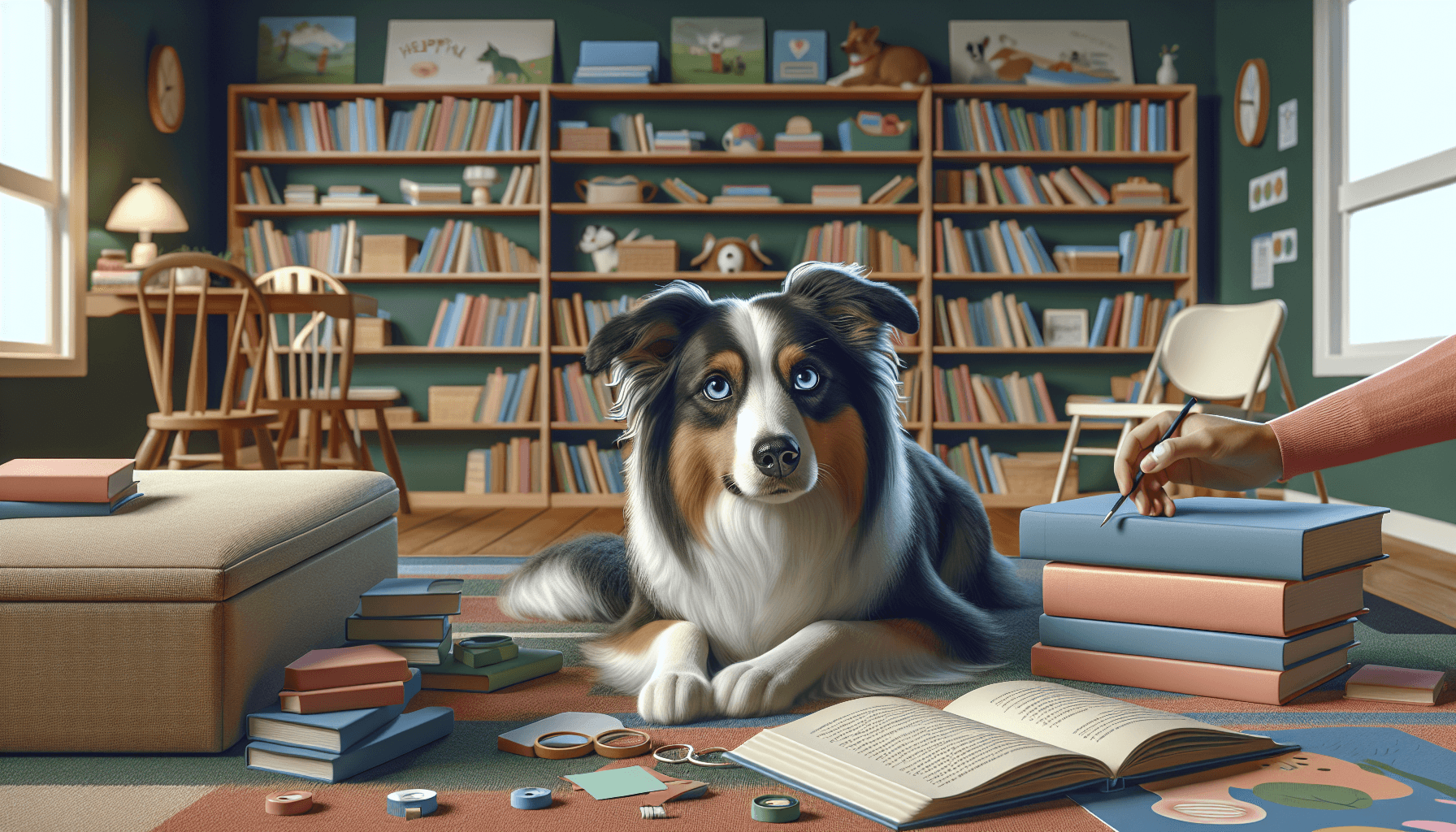
The Power of Picture Books
Picture books aren't just for beginning readers—they're sophisticated tools for developing literacy skills, emotional intelligence, and the love of reading that sustains lifelong learners. Here's why our therapy dogs and handlers rely on picture books far more than you might expect.
# The Power of Picture Books
Eleven-year-old Jamal was insulted when his handler pulled out a picture book. "I'm not a baby," he said, crossing his arms and refusing to look at the illustrated cover. "I don't read picture books." His resistance was understandable—he'd been placed in remedial reading groups, had endured years of struggling with texts his peers found easy, and now here was an adult offering him what looked like a book for kindergarteners. The insult felt intentional, even though it wasn't.
But then Captain, our yellow Labrador, nosed the book gently. "Captain loves this one," his handler Tom said casually. "He gets really excited during the surprise at the end." Jamal's curiosity—about the dog's reaction, not the book—broke through his resistance. He agreed to read just the first few pages. Twenty minutes later, he was rereading his favorite parts aloud, showing Captain the illustrations, and asking if there were more books by the same author.
Picture books occupy a peculiar position in literacy education. They're essential for developing readers but often abandoned prematurely. They contain sophisticated storytelling but are dismissed as simple. They provide unique benefits that no other format offers, yet students resist them because of perceived age-appropriateness. Our therapy dog reading program has learned to leverage picture books in ways that surprise many families—using them with older struggling readers, with advanced readers who need emotional depth, and with anxious readers who need manageable success experiences.
This guide explores why picture books deserve far more respect than they typically receive, and how therapy dog programs can use them effectively across ages and reading levels.
Understanding What Picture Books Actually Are
Picture books are not simplified texts with pretty illustrations added. They're a distinct literary form with unique characteristics that support reading development in ways no other format can.
**The picture-text relationship** creates meaning that neither element contains alone. In sophisticated picture books, illustrations don't simply depict what text describes—they extend, contradict, add layers, or tell parallel stories. Readers must integrate visual and textual information to fully comprehend. This integration develops cognitive skills that transfer to other reading contexts.
Bella, our Cavalier King Charles Spaniel, works extensively with picture books because her handler Michael understands their integrative complexity. "Watch how the illustrations show what the character is thinking while the text only says what they're doing," he'll prompt during sessions. Children who learn to read pictures alongside text become more sophisticated readers of text alone.
**Controlled text length** provides complete reading experiences in manageable doses. A child can read an entire picture book in one session, experiencing the satisfaction of story completion that chapter books delay across days or weeks. This completion satisfaction—beginning, middle, end, done—builds the sense of accomplishment that motivates continued reading.
**Visual scaffolding** supports comprehension when text alone would overwhelm. Struggling readers can use illustrations to understand plot, infer word meanings, and maintain narrative comprehension even when individual sentences challenge them. This scaffolding doesn't replace reading skill development—it enables reading experiences that build skills progressively.
**Emotional sophistication** in picture books often exceeds what their text complexity suggests. Topics like death, divorce, fear, friendship, and identity appear in picture book formats that make them accessible to young readers and to older readers who need simpler text with complex themes. Luna, our Border Collie mix, has accompanied readings of picture books about loss and grief that have moved adult visitors to tears—the books aren't simple just because they're short.
Picture Books for Beginning Readers
For emerging readers, picture books serve obvious purposes—but even these obvious purposes benefit from thoughtful selection and facilitation.
**Predictable texts** with patterns support early reading success. Books with repetitive phrases allow children to predict upcoming text, confirm predictions through reading, and experience the success that builds confidence. "Brown Bear, Brown Bear, What Do You See?" has launched countless reading journeys because its predictable structure ensures success.
Charlie, our Beagle, has heard this book hundreds of times and still appears engaged during each reading. His consistent attention—no matter how many times the same text appears—models the patient listening that supports early reader persistence.
**Concept books** teaching letters, numbers, colors, and shapes develop foundational knowledge while practicing reading behaviors. Children learn that books contain information, that pages proceed in order, that text conveys meaning—basic book concepts that precede actual decoding skill development.
**Wordless picture books** might seem counterintuitive for reading programs, but they serve important purposes. Children "read" the story through illustrations, developing narrative comprehension and story sense without decoding pressure. They can tell the dog the story in their own words, practicing oral language skills that support later reading.
Koda, our Bernese Mountain Dog, particularly suits wordless book sessions. His patient presence encourages children to take their time constructing narratives, while his occasional responsive movements (ear twitches, tail wags) provide the audience response that motivates continued telling.
**Controlled vocabulary texts** specifically designed for beginning readers limit vocabulary while maintaining interest. These books—often part of leveled reading series—allow children to practice with manageable word sets while experiencing real stories. The therapy dog audience makes these practice texts feel like genuine reading rather than drills.
Picture Books for Struggling Older Readers
The most underappreciated use of picture books is with older struggling readers—the Jamals who resist "baby books" while struggling with age-appropriate text. Picture books offer this population unique benefits when framed appropriately.
**Age-appropriate themes in accessible formats** allow older readers to engage with content that matters to them without the frustration of impossible text. Picture books about friendship, family, belonging, difference, and adventure speak to universal human experiences. The format makes them accessible; the themes make them relevant.
Max, our German Shepherd, works primarily with older readers, many of whom initially resist picture books. His handler Jennifer has developed specific approaches for overcoming this resistance: "I never apologize for picture books or explain why we're using them. I just present them confidently as books Max enjoys, and let the experience speak for itself."
**Vocabulary development** happens naturally when sophisticated words appear in illustrated contexts. Picture books often include rich vocabulary—"astonished," "magnificent," "peculiar"—surrounded by visual and textual context that supports meaning inference. Older readers encounter advanced vocabulary without the dense text that would overwhelm them.
**Fluency building** benefits from picture book text that's manageable enough to read smoothly. Struggling older readers often read word-by-word, never developing the flowing fluency that characterizes skilled reading. Picture books allow them to experience what fluent reading feels like—crucial for developing the skill.
**Comprehension focus** becomes possible when decoding doesn't consume all cognitive resources. Older readers struggling with grade-level texts rarely have attention left for comprehension once they've labored through decoding. Picture books free cognitive resources for understanding, inference, and enjoyment.
Tucker, our Australian Shepherd, works with several older readers who now eagerly request picture books after initially resisting them. "I like that I actually understand everything," one twelve-year-old explained. "I can think about what the story means instead of just trying to say the words." This shift—from survival decoding to meaningful comprehension—transforms reading experiences.
Picture Books for Advanced Readers
Surprisingly, picture books also serve advanced readers who might seem to have outgrown them. The unique characteristics of picture book format offer sophisticated readers experiences they can't get elsewhere.
**Visual literacy development** matters increasingly in our image-saturated world. Advanced readers who consume text fluently may not analyze visual information as carefully. Picture books—especially those with complex illustration-text relationships—develop visual literacy that transfers to media analysis, art appreciation, and critical viewing skills.
**Mentor texts for writing** demonstrate craft in concentrated doses. In thirty-two pages, picture books model complete story arcs, character development, effective dialogue, sensory description, and thematic depth. Young writers studying craft can analyze picture book technique more easily than novel-length examples.
**Emotional processing** sometimes needs simpler formats. Advanced readers facing difficult experiences—divorce, death, moving, sibling birth—may benefit from picture books that address these themes accessibly. The format allows processing without the commitment and complexity of longer texts.
Rosie, our Cocker Spaniel, occasionally works with advanced readers who specifically request picture books for comfort. Her handler Kevin doesn't question these requests: "Sometimes older kids just need something gentle. The picture book format provides that without requiring explanation."
**Cross-age reading practice** prepares older children to read to younger siblings, babysitting charges, or children in mentor programs. Practicing picture book reading with therapy dogs—learning pacing, expression, page turning, and audience engagement—develops skills these readers will use when reading to actual younger children.
Selecting Picture Books for Therapy Dog Sessions
Not every picture book works equally well in therapy dog contexts. Selection criteria differ from classroom choices because session goals differ.
**Appropriate length** ensures books can be completed in available time. A thirty-two-page picture book with dense text differs significantly from one with sparse text. Match book length to session duration, erring toward shorter—better to have time for rereading or second books than to leave stories unfinished.
**Dog-friendly content** shouldn't be underestimated. Books featuring dogs—or books children can plausibly share "with" dogs—enhance the dog-audience dynamic. Finn, our Irish Setter, seems to perk up during books about dogs, whether or not he actually recognizes the content. Children notice and respond to this apparent engagement.
**Illustration quality** matters for therapy contexts. Clear, engaging illustrations support comprehension and hold attention. Busy, confusing, or stylistically challenging illustrations may distract or frustrate struggling readers.
**Emotional appropriateness** requires careful judgment. Picture books addressing difficult themes can be powerful in therapy contexts, but handlers must assess readiness. A book about death might devastate a child whose pet recently died, or it might provide healing connection. Handler judgment, informed by knowledge of individual children, guides these selections.
**Cultural relevance** ensures children see themselves and their communities in book content. Our diverse dog team works with diverse children, and our book collections reflect that diversity—characters of various backgrounds, family structures, abilities, and experiences.
Facilitation Techniques for Picture Book Sessions
How handlers facilitate picture book reading matters as much as book selection. These techniques maximize picture book benefits during therapy dog sessions.
**Encourage picture reading.** Before or during text reading, invite children to look at and describe illustrations. "What do you see happening here?" "What do you think this character is feeling?" "What details did the illustrator include?" These questions develop visual literacy while providing comprehension scaffolding.
Olive, our Basset Hound, often appears to study illustrations during reading pauses. Her handler uses this apparent attention: "Look, Olive is noticing something in the picture. What do you think she sees?" Children examine illustrations more carefully when prompted by the dog's "observation."
**Model expressive reading.** Picture books invite expressive reading—voices, pacing, emphasis—that brings stories alive. Handlers can demonstrate expressive reading before children attempt it, creating expectations and permission for animated oral reading.
**Use multiple readings.** Unlike chapter books that progress forward, picture books can be reread immediately. First readings focus on decoding and basic comprehension; second readings allow for expression, detail notice, and deeper understanding. Don't assume one reading exhausts a book's value.
**Connect books to dogs.** Draw connections between story content and the therapy dog. "Does this character's dog remind you of Captain?" "How do you think Biscuit would act in this situation?" These connections enhance engagement while personalizing the reading experience.
**Allow lingering.** Picture books invite lingering over illustrations, rereading favorite pages, and savoring rather than rushing. Therapy dog sessions aren't about covering maximum material—they're about deep, positive reading experiences. Let children set the pace.
Building Picture Book Collections
Programs need picture book collections that serve diverse needs. Building these collections requires strategic thinking.
**Range of text complexity** ensures appropriate matches for various readers. Collections need very simple texts for beginning readers, moderately complex texts for developing readers, and sophisticated texts for advanced readers who benefit from picture book experiences.
**Thematic variety** allows matching books to children's interests and needs. Adventure, humor, animals, family, friendship, fantasy, realism, nonfiction—diverse themes engage diverse children.
**Cultural representation** matters for every collection. Children should see characters who look like them and characters who look different. They should encounter diverse family structures, abilities, and experiences presented positively.
**Classic and contemporary** balance ensures access to beloved texts that have proven their value while including recent publications that reflect current experiences and publishing trends.
**Physical condition** affects session quality. Picture books should be clean, intact, and inviting. Worn, damaged books communicate that reading isn't valued. Maintain collections carefully and replace books when they become too worn.
Ginger, our Shiba Inu, works at a library that maintains a dedicated therapy dog reading collection. These books are separated from general circulation, allowing consistent condition maintenance and ensuring favorite titles are always available when regular readers request them.
Advocating for Picture Book Value
Parents, teachers, and even children sometimes resist picture books based on age-appropriateness misconceptions. Handlers become advocates for picture book value, educating stakeholders about what these books actually offer.
**Reframe simplicity.** Picture books aren't simple—they're concentrated. Thirty-two pages contain complete story arcs that novels stretch across hundreds of pages. This concentration isn't easier; it's more efficient.
**Cite research.** Studies demonstrate picture book benefits for readers of all ages. Vocabulary development, comprehension skills, visual literacy, and reading enjoyment all improve through picture book engagement. Research validates what experienced handlers observe.
**Share success stories.** Jamal's transformation from resistant to enthusiastic reader happened through picture books. These stories counter misconceptions more effectively than abstract arguments. Real examples demonstrate real value.
**Model enthusiasm.** Handlers who genuinely love picture books communicate that enthusiasm to children and families. If adults treat picture books as childish compromises, children will too. If adults treat them as valued literary experiences, children follow that lead.
Apollo, our Great Dane, accompanies picture book readings with the same dignified attention he brings to chapter books. His handler deliberately treats picture books with respect, never apologizing for them or implying they're steps toward "real" books. Picture books are real books—valuable in themselves, not just as precursors to something else.
The Lasting Gift
Picture books give children something chapter books cannot: complete, contained, satisfying reading experiences that fit into single sessions. A child who reads a picture book with a therapy dog has done something whole—begun a story, followed it through, reached its conclusion, experienced its full meaning. That wholeness matters.
Jamal, the eleven-year-old who refused picture books, now specifically requests them during his sessions with Captain. He's also reading chapter books at home, his skills developed partly through the fluency, vocabulary, and comprehension work that picture books enabled. But he hasn't abandoned picture books—he's discovered that they offer pleasures no other format provides.
"I like that they're done when they're done," he explained recently. "I can hold the whole thing in my head. And Captain really does get excited at the endings." Whether Captain actually responds to story endings, or Jamal just needs to believe he does, doesn't matter. What matters is that picture books have become part of Jamal's reading life—not a stage he passed through, but a format he values.
That's the power of picture books in therapy dog reading: not replacing other reading but enriching it, not serving only beginners but offering something unique to everyone, not functioning as steps toward "real" reading but standing as valuable reading experiences in their own right. Our dogs don't judge books by their length or their illustrations. They just listen. And in that listening, children discover that picture books have power they never expected.

Paws & Pages Team
The Paws & Pages team is dedicated to building confident readers through the unconditional love of therapy dogs. Our team of educators, trainers, and volunteers share tips, stories, and resources to support literacy and the human-animal bond.
View all posts