5 Books That Therapy Dogs Love (And Kids Do Too)
After thousands of reading sessions, our therapy dogs have developed clear favorites. Here are five books that consistently produce tail wags, perked ears, and fully engaged young readers.
# 5 Books That Therapy Dogs Love (And Kids Do Too)
Here's a secret that every handler at Paws & Pages knows: our therapy dogs have opinions about books. Not opinions in the human sense of literary criticism, but genuine physical responses that vary dramatically depending on what's being read. Some books consistently produce perked ears, focused attention, and enthusiastic tail wags. Others—perfectly fine books, loved by children—leave our dogs drowsy and disengaged.
After thousands of reading sessions across our eighteen therapy dogs, we've identified clear favorites—books that create magic for both the furry listener and the young reader. These aren't necessarily the "best" books in any objective sense, but they're the books that reliably produce the engaged reading experiences that make our program work.
1. "Dog Man" Series by Dav Pilkey
If there were a canine bestseller list, Dav Pilkey's Dog Man series would top it permanently. These graphic novels feature a superhero who is part dog, part policeman—a premise that shouldn't work but absolutely does—and they have an almost magical effect on our therapy dogs.
Captain, our enthusiastic yellow Lab, practically vibrates when children read Dog Man books to him. Handler Marcus Thompson first noticed the phenomenon during a Saturday session: "A kid opened the first Dog Man book, and Captain's whole body changed. His ears went forward, his eyes tracked the book, his tail started wagging. When the kid did different voices for characters, Captain would tilt his head. It was like he was following the story."
The effect isn't limited to Captain. Tucker, our Australian Shepherd with heterochromatic eyes, shows similar engagement with the series. Handler Sandra Lee theorizes it's the energetic reading style the books encourage: "Dog Man is funny, action-packed, full of exclamations and dramatic moments. Kids naturally read it with more expression, more energy. And dogs respond to that energy. They might not understand plot, but they understand enthusiasm."
For reluctant readers especially, the Dog Man series is transformational. The graphic novel format is less intimidating than dense text. The humor keeps children engaged. And when they see their therapy dog leaning forward, tail wagging at the exciting parts, they feel validated in a way that no adult encouragement can replicate.
**Best for:** Reluctant readers ages 6-12, children who think they hate reading, anyone who needs permission to enjoy "fun" books
**Why dogs love it:** The expressive reading, the excitement, the way children's voices change during action scenes
2. "Good Dog, Carl" by Alexandra Day
At the opposite end of the spectrum from Dog Man's frenetic energy sits Good Dog, Carl—a nearly wordless picture book that creates some of the most profound reading experiences in our program.
The book follows Carl, a Rottweiler, caring for a baby while the mother is away. With only a few words per page, children must "read" the pictures, narrating what they see. This format is revolutionary for struggling readers who fear text, and it's deeply beloved by our therapy dogs.
Biscuit, our founding Golden Retriever, shows particular affection for Good Dog, Carl. Handler Dr. Emily Chen has observed hundreds of sessions with this book: "Something shifts when children realize they're telling the story themselves. There's no 'right' way to read it, no words to stumble over. They look at the pictures, describe what Carl is doing, and Biscuit listens with this expression of... I want to say understanding. Like she recognizes the story somehow."
Koda, our Bernese Mountain Dog, responds similarly. Handler Steven Park positions Koda so children can show him each page as they narrate: "Kids point at the pictures and tell Koda what's happening. 'Look, the dog is giving the baby a bath!' They're reading—really reading—without the anxiety of decoding. And Koda's attention validates their storytelling."
The book has become a cornerstone of our work with pre-readers and severely anxious readers. It proves that reading isn't about words—it's about meaning, connection, and sharing stories with others.
**Best for:** Pre-readers ages 2-5, anxious readers who fear making mistakes, English language learners, anyone who needs a confidence boost
**Why dogs love it:** The direct attention as children show pictures, the animated pointing, the excited narration
3. "Harry the Dirty Dog" by Gene Zion
Some books become classics because they tap into something universal. Harry the Dirty Dog, first published in 1956, endures because every child—and every dog—understands the appeal of a good mud puddle.
The story follows Harry, a white dog with black spots, who hates baths so much that he buries the scrub brush and runs away from home. He gets so dirty that his family doesn't recognize him, and he must dig up the brush and beg for a bath to prove his identity. It's a simple story with a satisfying arc, and our therapy dogs respond to it with what can only be described as fellow-feeling.
Olive, our Basset Hound with her expert tracking nose, seems particularly sympathetic to Harry's plight. Handler Rachel Green recalls a memorable session: "A little girl was reading Harry the Dirty Dog to Olive, and when she got to the part where Harry rolls in coal dust, Olive let out this long sigh—like she completely understood the temptation. The girl said, 'Olive knows about getting dirty!' and they both seemed to share a moment of muddy solidarity."
Charlie, our mellow Beagle, has heard Harry's story dozens of times and maintains consistent interest. Handler Diane Martinez notes that the predictable structure helps anxious readers: "They know what's coming—Harry will get dirty, get clean, be recognized. That predictability lets them focus on the reading instead of worrying about the plot."
The book's manageable length (about 40 pages with pictures) makes it perfect for building reading stamina. Children feel the accomplishment of finishing a "real" book, and their therapy dog's sustained attention throughout validates the achievement.
**Best for:** Early readers ages 4-8, children building reading stamina, anyone who needs a predictable, satisfying story
**Why dogs love it:** The themes of adventure and bath-avoidance (universal dog experiences), the rhythmic text, the satisfying resolution
4. "The Adventures of Beekle" by Dan Santat
Sometimes the books our dogs love most aren't about dogs at all. The Adventures of Beekle, Dan Santat's Caldecott Medal winner, tells the story of an imaginary friend waiting to be chosen by a real child. It's emotionally rich, visually stunning, and creates profound connections in reading sessions.
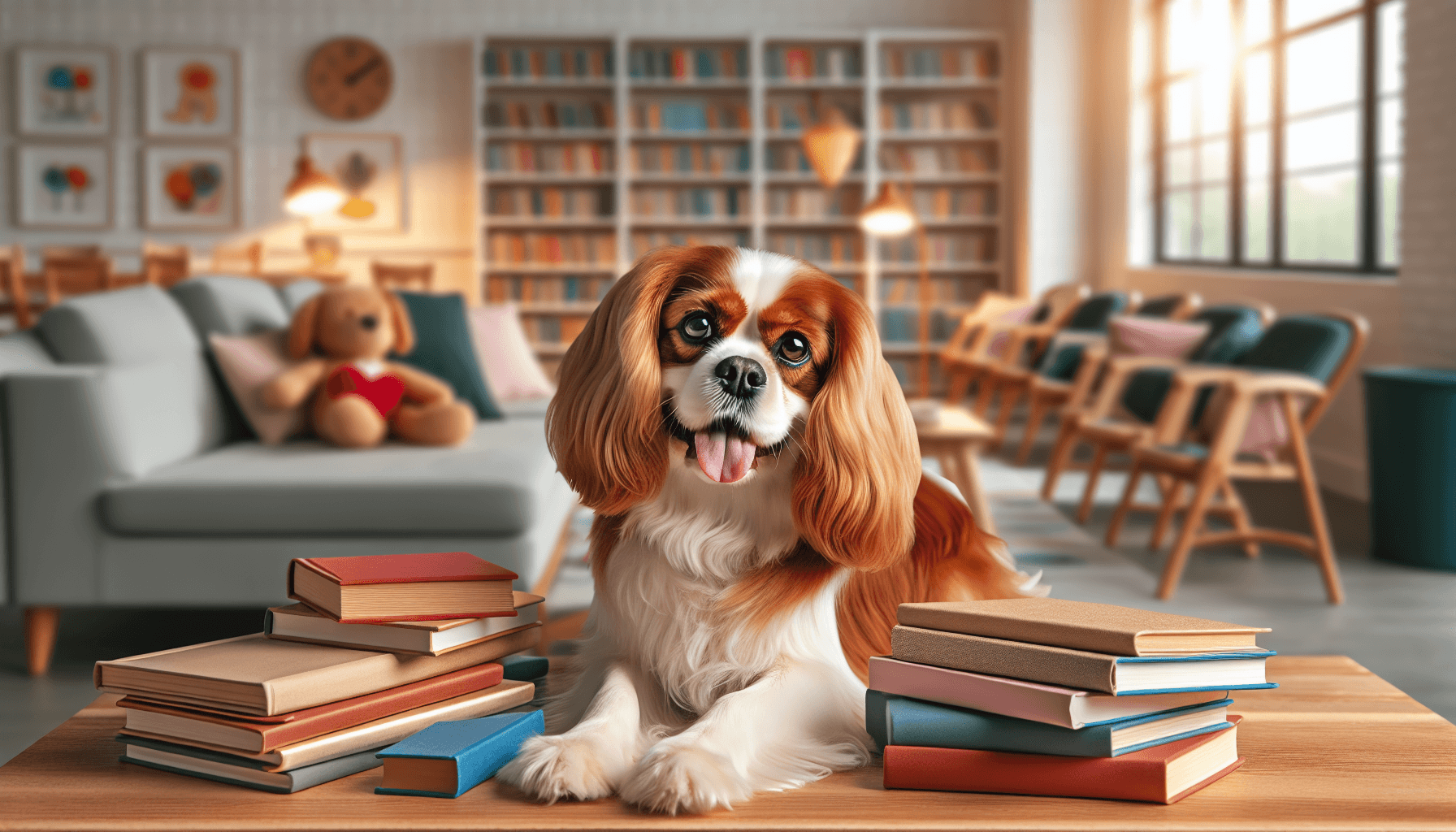
Bella, our gentle Cavalier King Charles Spaniel, shows remarkable responsiveness during Beekle readings. Handler Thomas Park has watched her body language shift with the story's emotional beats: "When Beekle is lonely, waiting to be chosen, Bella gets very still and her eyes get soft. When Beekle finally finds his friend, her tail starts wagging. I'm not claiming she understands narrative, but she absolutely responds to how children read different emotional sections."
The book works especially well for children processing feelings of isolation or seeking connection—which, given that many struggling readers feel isolated by their struggles, is a large portion of our participants. Reading about Beekle's patient waiting, his journey to find his person, his joyful union with the child who needs him, children find metaphors for their own experiences.
Luna, our Border Collie mix with one blue eye and one brown, has become associated with Beekle in the minds of several regular readers. Handler Marcus Thompson explains: "One girl told me Luna was her Beekle—she'd been waiting for Luna her whole life, and Luna had been waiting for her. They 'found' each other through our program. Now every time she comes, she asks to read Beekle to Luna. It's their story."
**Best for:** Children ages 4-10, those processing loneliness or friendship difficulties, emotionally sensitive readers who need stories that honor big feelings
**Why dogs love it:** The emotional investment children bring to reading, the gentle pacing, the joyful resolution that makes readers happy (and happy readers make happy dogs)
5. "The Poky Little Puppy" by Janette Sebring Lowrey
As one of the original Little Golden Books, The Poky Little Puppy has been delighting children since 1942. Its rhythmic text, gentle story, and themes of curiosity and consequence resonate across generations—and our therapy dogs seem to recognize a kindred spirit in the curious protagonist.
The story follows five puppies who dig under a fence to explore the wide world, and one puppy who is always lagging behind, poking into things, having adventures while his siblings hurry ahead. The repetitive structure makes it perfect for emerging readers, and the sympathetic puppy protagonist creates immediate connection with our furry listeners.
Rosie, our gentle Cocker Spaniel, has become our Poky Little Puppy specialist. Handler James Wilson started noticing the pattern during family reading sessions: "Little kids love this book, and Rosie pays attention to it in a way she doesn't always with other early readers. I think it's the pacing—the 'roly-poly, pell-mell, tumble-bumble' descriptions, the way kids naturally slow down and speed up. Rosie's ears move with the rhythm."
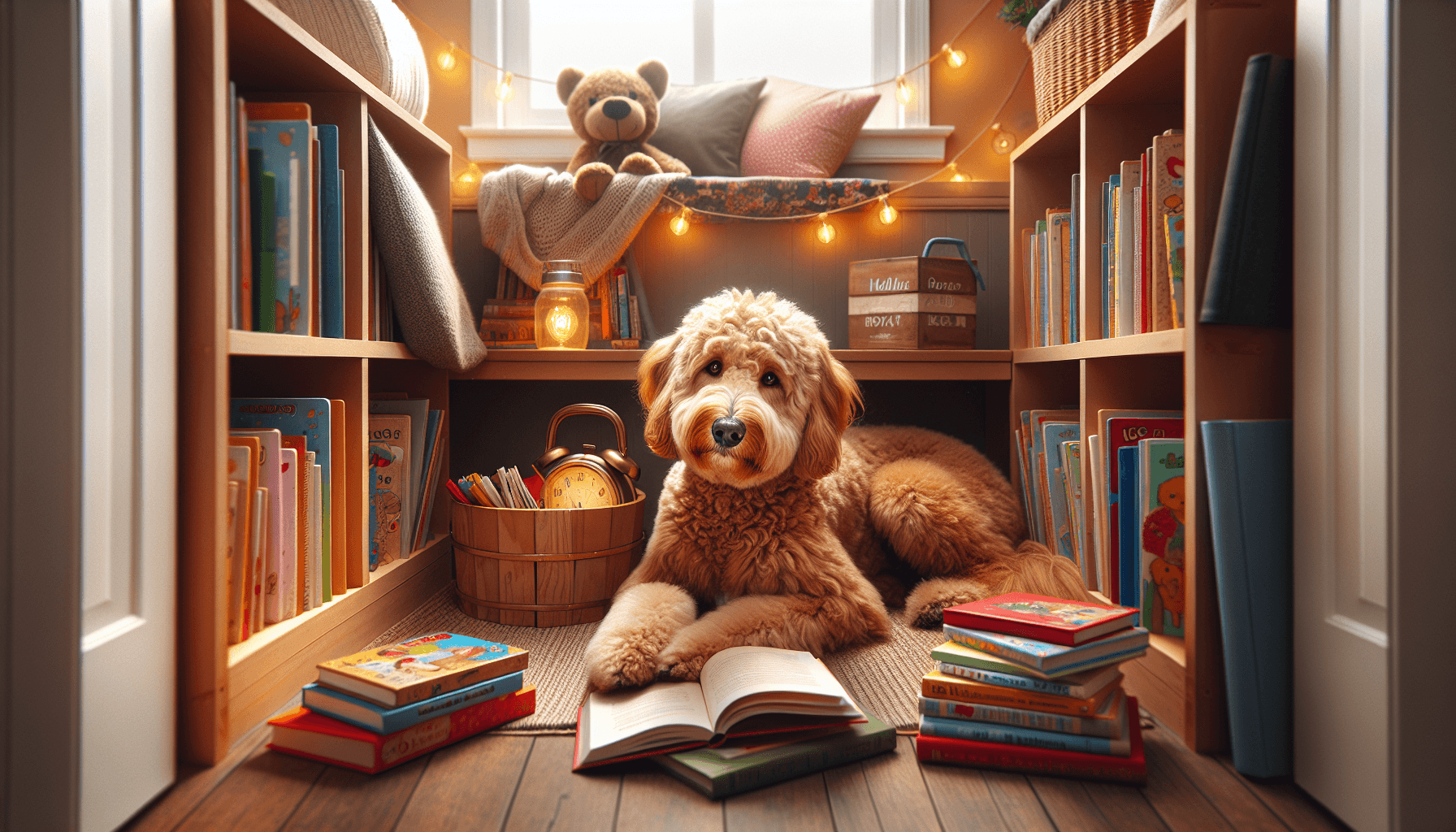
Honey, our apricot Goldendoodle, also demonstrates notable engagement with this classic. Handler William Santos uses it specifically with beginning readers working on fluency: "The repetitive phrases—'down through the meadow, to the rice pudding'—give kids something to practice. They read it once stumbling, twice better, three times almost fluent. And Honey stays engaged every time, which keeps kids willing to practice."
The book's nostalgic quality also creates multigenerational connections. Grandparents who bring grandchildren to our sessions often request The Poky Little Puppy, sharing a book they loved as children. These sessions have a special warmth—three generations connected by a story and a dog.
**Best for:** Early readers ages 3-7, fluency practice, multigenerational reading sessions, anyone who loves classic children's literature
**Why dogs love it:** The rhythmic text patterns, the slow/fast pacing variations, the gentle energy that creates calm engagement
Honorable Mentions: Books Our Dogs Also Love
Beyond our top five, several other titles consistently produce engaged dogs and delighted readers:
**"Where the Wild Things Are" by Maurice Sendak** - The growling, roaring, and wild rumpus pages encourage expressive reading that dogs respond to with perked ears and wagging tails. Max, our German Shepherd, seems particularly interested when children "roar their terrible roars."
**"Clifford the Big Red Dog" series by Norman Bridwell** - Straightforward stories about a giant dog create easy connection between page and listener. Children frequently show Clifford pictures to their therapy dog, creating compare-and-contrast conversations: "Clifford is big, but you're the perfect size."
**"Pete the Cat" series by James Dean** - The repetitive refrains ("It's all good!") and musical structure encourage rhythmic reading that dogs find engaging. Captain, our yellow Lab, has been known to move in time with the cadence.
**"Bark, George" by Jules Feiffer** - This short, silly book about a dog who meows, quacks, and oinks instead of barking produces infectious giggling—and dogs love the sound of children laughing. Tucker, our Australian Shepherd, invariably wags his tail during Bark, George sessions.
Why Book Choice Matters
Selecting the right book for a therapy dog reading session isn't just about matching reading level—it's about finding stories that create the engaged, joyful reading experiences that build positive associations with books.
Ginger, our composed Shiba Inu, demonstrates this principle clearly. Handler Patricia Moore has observed that Ginger responds differently to different types of books: "When kids read textbook-style content—informational text for school assignments—Ginger stays polite but clearly less interested. When they read stories with emotional resonance, she leans in, her eyes brighten. Kids notice. They want to find the books that make Ginger interested."
This preference isn't about sophistication or subject matter. It's about how children read. Engaging stories encourage expressive, emotional reading. Children vary their voices, speed up during exciting parts, slow down during sad parts. They laugh, gasp, make predictions. All of this human animation engages dogs, who have evolved to attend to human emotional expression.
Building Your Dog-Approved Library
For families and programs looking to build a collection of therapy-dog-tested books, consider these principles:
**Choose books that encourage expression.** Dialogue-heavy books, books with sound effects, books with emotional variation—these naturally produce the animated reading that engages dogs.
**Match dog temperament to book energy.** An energetic dog like Captain does well with action-packed stories. A calm dog like Olive thrives with gentler tales. Notice your dog's natural energy level and select accordingly.
**Follow the child's interests.** A book the child genuinely wants to read will be read with more engagement than an assigned text, regardless of how "good" the book is. Dogs respond to enthusiasm more than literary quality.
**Include variety.** Different sessions call for different books. Build a library that includes high-energy options, calming options, laugh-out-loud options, and emotionally resonant options.
Most importantly, pay attention to how your specific dog responds. Every dog is different. Daisy, our fluffy Samoyed, has shown surprising interest in books about winter and snow—possibly recognizing something of her Arctic heritage in the imagery. Apollo, our Great Dane, responds well to books with large illustrations that children can show him from a distance. Discover your dog's preferences through observation and experimentation.
The Real Secret
Here's the truth that every Paws & Pages handler eventually learns: the specific book matters less than the reading experience it creates. A child reading their favorite book with joy and enthusiasm will engage any well-trained therapy dog. The books on our list aren't magic—they just consistently create the conditions for magic to happen.
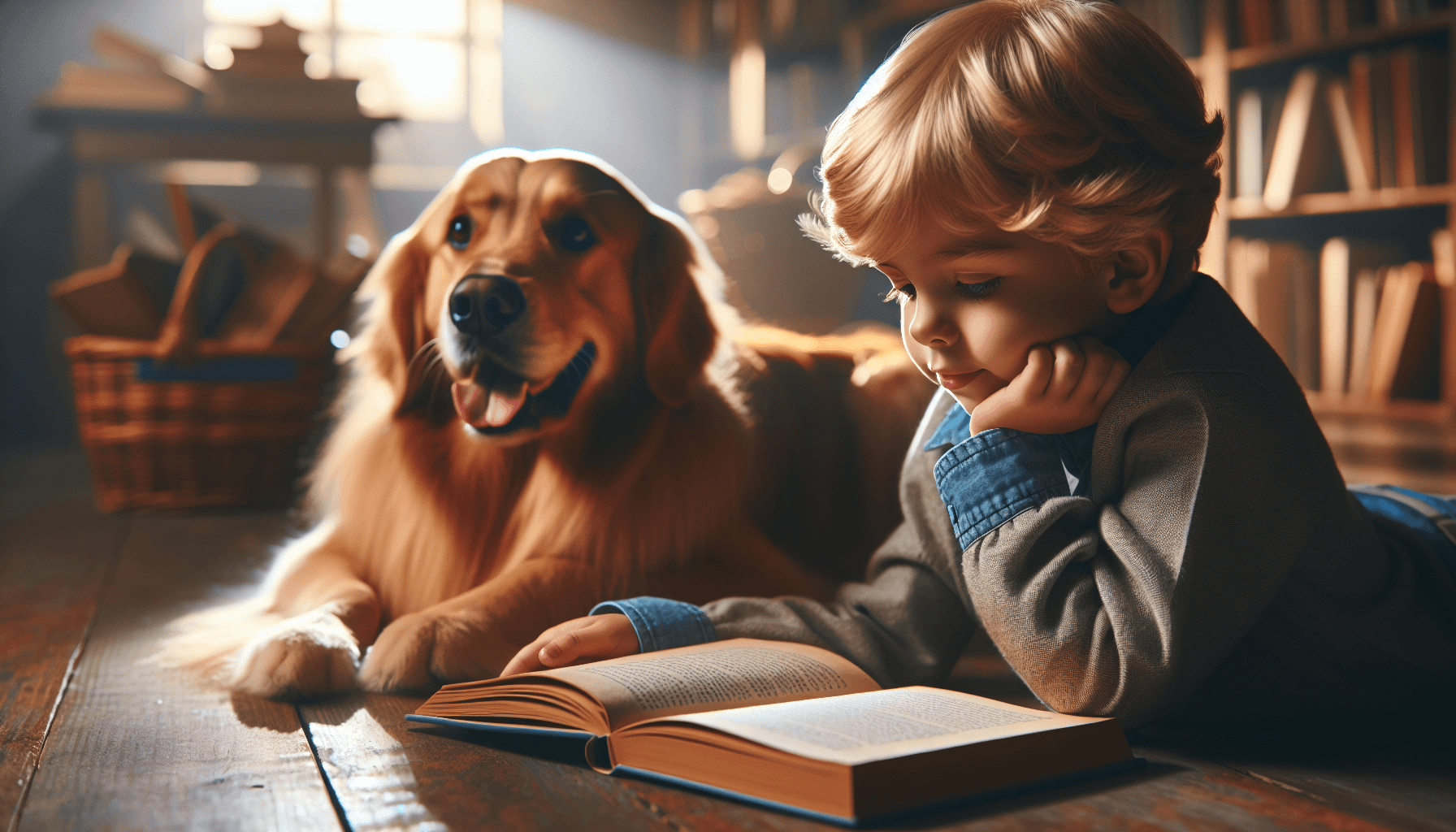
When seven-year-old Sofia reads Dog Man to Captain with different voices for every character, Captain's engagement isn't about appreciating Dav Pilkey's storytelling. It's about responding to Sofia's energy, her excitement, her happiness. The book is the vehicle; the relationship is the destination.
So browse our recommendations, try our favorites, but ultimately let your child and your dog guide you. The best book is always the one that makes both reader and listener want to come back for more. At Paws & Pages, we've found five that work reliably—but the next perfect book might be one you discover together.
Paws & Pages Team
The Paws & Pages team is dedicated to building confident readers through the unconditional love of therapy dogs. Our team of educators, trainers, and volunteers share tips, stories, and resources to support literacy and the human-animal bond.
View all posts