How Luna Helped a Classroom
When Mrs. Patterson's third-grade class was struggling with reading engagement, she didn't expect the solution to have four legs and mismatched eyes. Here's how Luna transformed twenty-three students in one remarkable semester.
# How Luna Helped a Classroom
Mrs. Diane Patterson had been teaching third grade for twenty-two years. She'd seen trends come and go, survived standardized testing revolutions, and adapted to more curricular changes than she could count. But the class of twenty-three eight-year-olds she inherited that September presented a challenge she'd never quite faced: a classroom so collectively averse to reading that silent reading time had become silent staring-at-the-wall time.
"It wasn't that they couldn't read," she explained later. "Most of them could decode just fine. They simply wouldn't. Reading was something they endured rather than enjoyed. I'd never seen such universal disengagement."
Mrs. Patterson tried everything in her considerable arsenal. Reading incentive programs. Book clubs. Dramatic read-alouds. Audiobook pairing. Library scavenger hunts. Nothing moved the needle. Then, during a particularly frustrating October staff meeting, a colleague mentioned her neighbor's therapy dog program—something called Paws & Pages that sent dogs to read with struggling readers.
"I wasn't thinking about struggling readers," Mrs. Patterson recalls. "I was thinking about unmotivated readers, which is different. But I was desperate enough to try anything."
Luna's Arrival
Two weeks later, Luna walked into Room 14 and twenty-three jaws dropped simultaneously.
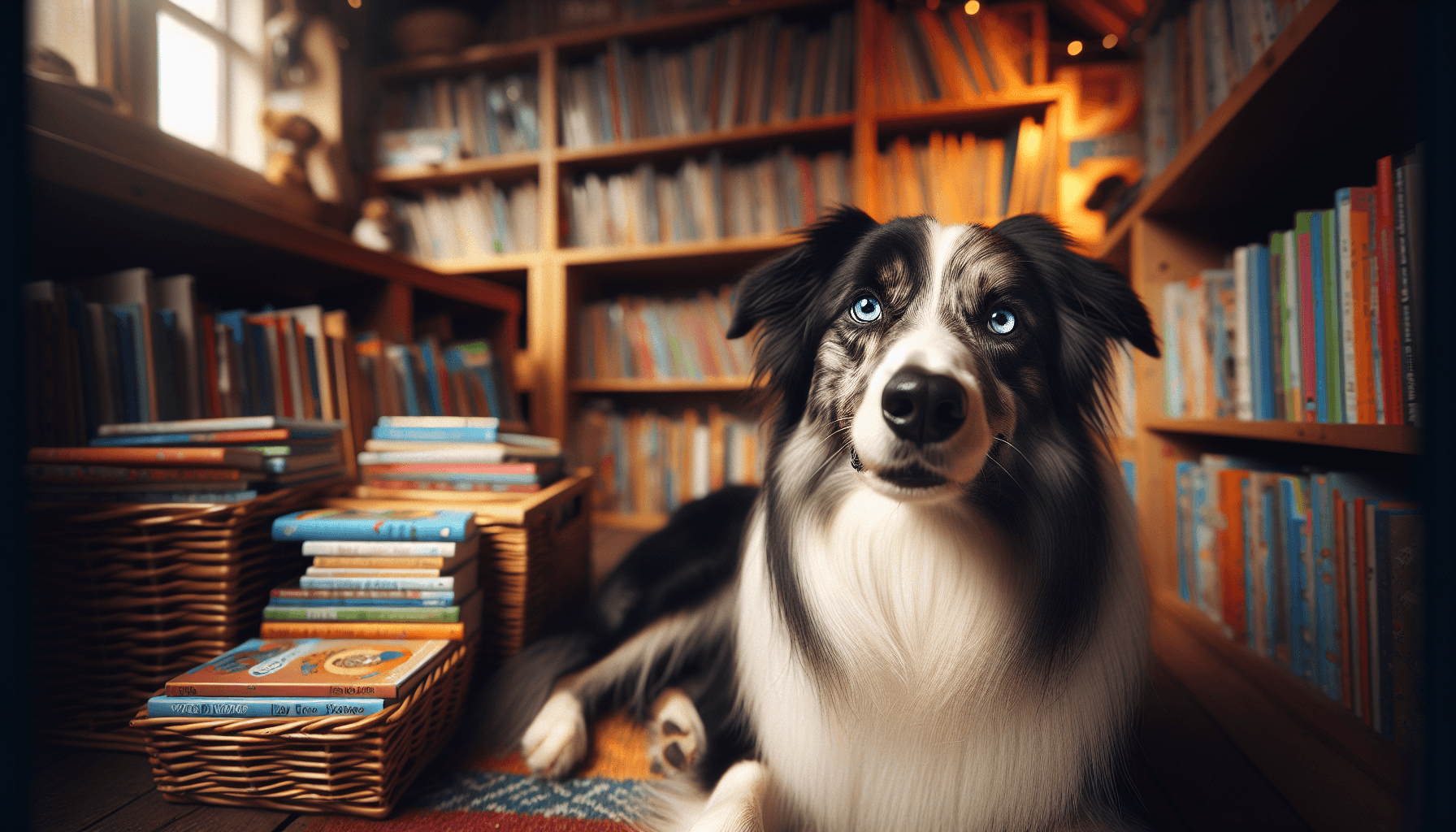
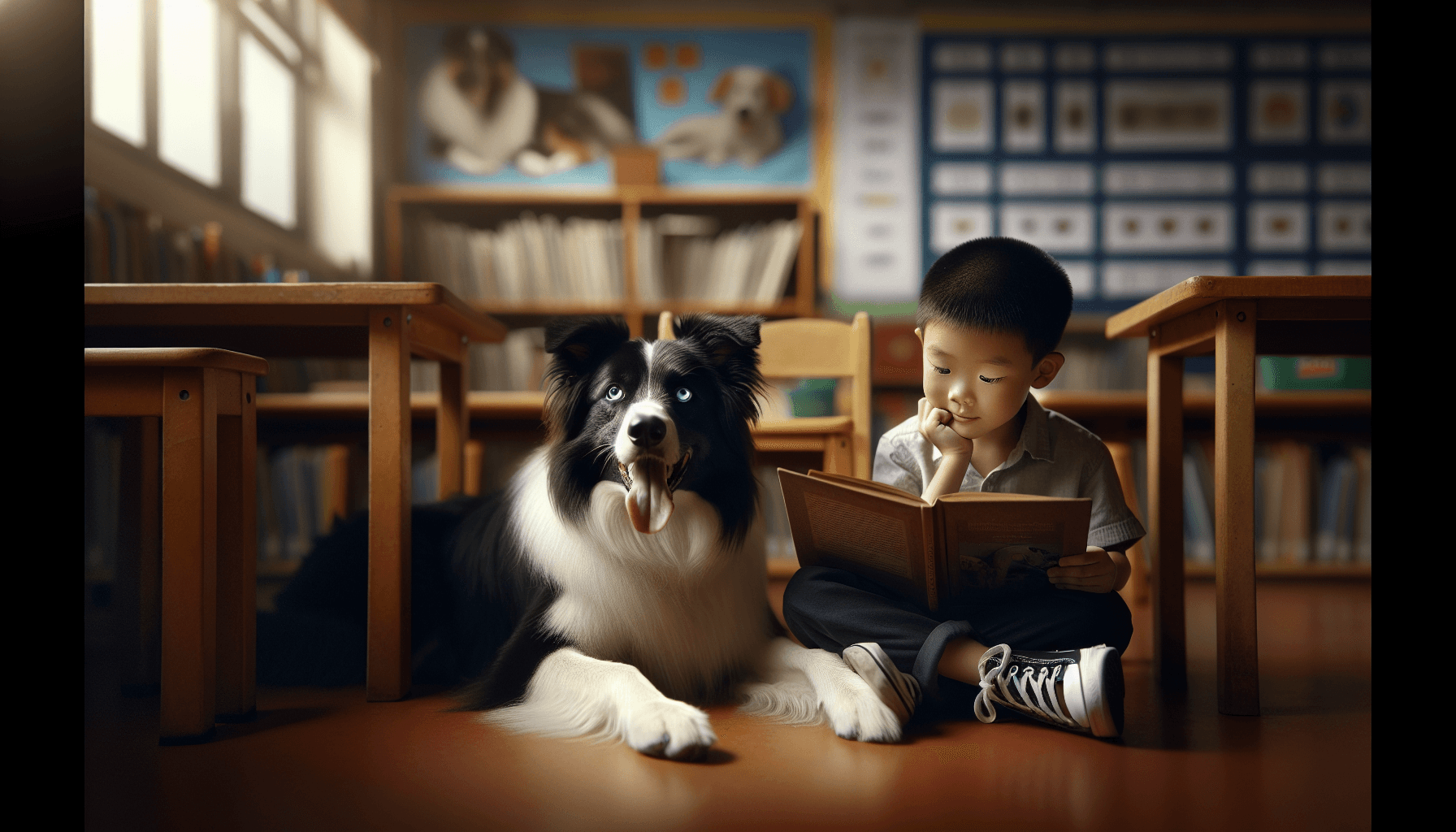
Luna is not your typical therapy dog. A Border Collie mix with heterochromatic eyes—one crystalline blue, one warm amber—she commands attention simply by existing. Her black and white coat gleams, and she moves with the focused intensity of her herding ancestry. But it's her eyes that captivate. Children who meet Luna invariably comment that she seems to be looking straight into their souls.
Handler Marcus Thompson positioned Luna on a large cushion in the classroom's reading corner. The students, gathered on the carpet for morning meeting, couldn't take their eyes off her.
"She has different colored eyes," whispered Aaliyah, a quiet girl who typically spoke as little as possible in class.
"Why does she have different colored eyes?" demanded Marcus—the other Marcus, the classroom's most vocal skeptic of all things academic.
Handler Marcus explained that Luna's heterochromia made her special, that she saw the world a little differently than most dogs. He didn't mention that Luna also seemed to sense emotions with uncanny accuracy, that she would position herself closer to anxious children without being prompted, that her intense focus made every reader feel like the most important person in the room.
"She's here to listen to you read," Handler Marcus said simply. "That's her job. She loves stories."
The First Week: Skepticism and Surprise
Mrs. Patterson had prepared a sign-up sheet for reading sessions, expecting to have to cajole reluctant volunteers. Instead, every slot filled within thirty seconds, with students bargaining for additional time slots and complaining about fairness.
The first readers approached Luna with the nervous energy of meeting a celebrity. Eight-year-old Cameron, who had proudly declared that "books are boring" at least thirty times since September, sat down beside Luna clutching a graphic novel about superheroes.
"Is this okay?" he asked Handler Marcus, showing the book. "It's not like a real book."
"Luna loves all kinds of stories," Marcus assured him.
Cameron began to read. His voice started flat and fast—the reading voice of someone getting through a chore. But Luna's eyes tracked his face with such intensity that Cameron paused mid-sentence.
"Is she actually listening?" he asked.
"She's fascinated," Marcus confirmed. "She's never heard this story before."
Something shifted in Cameron's posture. He sat up straighter. His voice found inflection. When he reached an exciting action sequence, Luna's ears perked up, and Cameron practically shouted the sound effects. He read for twenty minutes—fifteen more than the allotted time—and had to be gently reminded that other students were waiting.
"Mrs. Patterson," he announced upon returning to his desk, "I need a different book. I have to find out what happens next, and Luna's going to want to know too."
Mrs. Patterson, who had observed the session through the reading corner's window, felt the first flicker of hope she'd experienced all year.
The Transformation Unfolds
Luna visited Room 14 every Tuesday and Thursday for the rest of the semester. The changes were gradual at first, then suddenly unmistakable.
The classroom library, which had sat largely untouched since September, required reorganization within three weeks. Students were checking out books faster than Mrs. Patterson could track them. More remarkably, they were talking about books—to each other, spontaneously, without prompts or incentives.
"Did you read to Luna about the dog who solves mysteries?" one student would ask another.
"Yes! You should try this one—it's even better. Luna went crazy when I read the part about the stolen diamonds."
Mrs. Patterson noticed something else: students were listening more carefully to each other's reading session stories than they had ever listened to anything she'd said about books. Luna had become a shared reference point, a common interest that crossed the usual social boundaries of elementary school.
Aaliyah, the girl who rarely spoke, had found her voice through Luna. Something about Luna's calm, non-demanding attention made Aaliyah feel safe. She started reading to Luna weekly, then asking Handler Marcus questions about Luna's life, then talking to classmates about what she and Luna had read. By December, Aaliyah was voluntarily participating in class discussions—still quietly, but participating.
Marcus the Skeptic had become Marcus the Reading Evangelist. The boy who had declared books boring was now recommending books to anyone who would listen, always with the qualification: "Luna really liked this one." His parents reported that he was reading at home for the first time since kindergarten.
The Science of What Happened
Mrs. Patterson, ever the educator, wanted to understand what was happening in her classroom beyond "the dog is magic." She started reading research on animal-assisted interventions and discovered that Luna was triggering precisely the neurological and psychological responses that support learning.
The cortisol reduction was visible. Students who approached the reading corner with the tense shoulders and guarded expressions of academic dread visibly relaxed in Luna's presence. Their bodies softened. Their breathing slowed. They stopped seeing reading as a threat to be survived.
The oxytocin boost explained the social changes. Students who read to Luna weren't just developing individual reading habits—they were developing a shared emotional connection mediated by their common relationship with the dog. Luna had become the social glue that made reading a community activity rather than an isolated performance.
And Luna's focused attention—that intense Border Collie gaze—provided something many struggling readers desperately needed: the experience of being genuinely listened to without judgment or evaluation. Luna didn't correct pronunciation. She didn't quiz on comprehension. She just listened, ears perked, eyes locked on the reader's face, tail occasionally thumping at exciting moments.
Individual Transformations
By winter break, Mrs. Patterson could document specific transformations for nearly every student.
The twins, Sofia and Jayden, had turned reading into a competitive sport—but a healthy one. They compared what they'd read to Luna, challenged each other to find books Luna would like, and debated which stories had gotten the biggest reaction. Their reading levels jumped significantly, propelled by sheer volume of engaged practice.
Tyler, a student with attention challenges who typically couldn't sit still for five minutes, discovered that petting Luna's soft fur while reading helped him focus. Handler Marcus taught him to read a paragraph, then pet Luna, then read another paragraph—a rhythm that matched Tyler's brain instead of fighting against it. For the first time, Tyler finished entire books and remembered what happened in them.
Emma, whose parents had recently divorced, found in Luna a constant in her suddenly unstable world. Reading to Luna became Emma's twice-weekly anchor, the part of school she could count on. Mrs. Patterson noticed that Emma's general anxiety decreased on Luna days—she was calmer, more engaged, more present across all subjects.
And Marcus—the original skeptic—had the most dramatic transformation of all. By February, he had started writing his own stories specifically to read to Luna. "She's heard all the library books," he explained seriously. "I need to give her something new." His stories were illustrated, increasingly complex, and featured a hero dog who looked suspiciously like a Border Collie with different colored eyes.
The Numbers That Mattered
At the semester's end, Mrs. Patterson ran the standardized reading assessments that she was required to administer. The results made her double-check her scoring.
Average reading fluency had increased by 23%—more than triple the typical growth for a semester. Reading comprehension scores showed similar gains. But Mrs. Patterson knew the numbers didn't capture the most important change: her students wanted to read. For the first time all year, silent reading time was actually silent reading time.
The school's literacy coach was skeptical when Mrs. Patterson presented her data. "One dog can't produce those results," she argued.
But Mrs. Patterson knew it wasn't just the dog. It was what Luna represented: reading as connection rather than evaluation, stories as gifts to be shared rather than tests to be passed, and the revolutionary idea that an audience—even a furry, four-legged one—could make all the difference.
What Luna Taught Room 14
Luna still visits Room 14 every week. Mrs. Patterson now recommends the program to every struggling colleague she encounters, always with the same caveat: "It's not just about the dog. It's about what the dog makes possible."
Handler Marcus has watched Luna work with dozens of classrooms, but he maintains that Room 14 was special. "The whole class transformed together," he observes. "Usually we see individual changes. Here, the classroom culture shifted. Reading became something they did together, even when Luna wasn't there."
Perhaps that's Luna's greatest gift: not just what she does during reading sessions, but what she inspires between them. Room 14's students still talk about Luna with a proprietary affection. They still recommend books to each other with the qualifier, "Luna loved this one." They've internalized the lesson that reading is better when shared—a lesson that will serve them long after they've forgotten the specific books they read in third grade.
Last week, Aaliyah—the girl who used to speak as little as possible—stood up in front of the class to deliver a book report. She was nervous, her voice shaking slightly. But she took a deep breath, looked at the reading corner where Luna would sit next Tuesday, and began.
Her report was about a story she'd first read to Luna. She spoke for five full minutes without stopping. When she finished, the class erupted in applause.
Later, Mrs. Patterson asked Aaliyah how she'd found the courage.
"I just pretended everyone was Luna," Aaliyah said simply. "Luna never made me feel stupid for being nervous. So I just imagined the whole class had different colored eyes."
Some stories stay with you long after they're told. This is one of them.
Paws & Pages Team
The Paws & Pages team is dedicated to building confident readers through the unconditional love of therapy dogs. Our team of educators, trainers, and volunteers share tips, stories, and resources to support literacy and the human-animal bond.
View all posts